What we do
Diamond cut alloy wheels
Diamond cut alloys recut on a CNC lathe and sealed under fresh lacquer, so the finish survives a Scottish winter.
Our own workshop
The lathe, the booth and the oven are all in one unit in Larkhall. Nothing is sent out to anyone else.
Collected and returned
We come to you across central Scotland and bring the wheels back balanced and ready to fit.
Guaranteed, or redone
If you are not happy with the finish, we redo it. One workshop did the work, so there is nobody else to blame.
Checkable reviews
Real named reviews on our Google profile, which you are welcome to go and read in full.
The problem
What goes wrong with a diamond cut finish
A factory diamond cut wheel is bare machined aluminium under a thin coat of clear lacquer. That lacquer is the only thing between the metal and the road. Once it lifts, water gets underneath and the aluminium starts to oxidise.
You will see it first as a milky bloom behind the clear coat, usually on the lower spokes where standing water sits. Left alone it spreads outward into white pitting and the lacquer peels away in sheets. Winter road salt accelerates every stage of it.
This is why a diamond cut wheel cannot be touched in. There is no filler and no paint that matches machined metal. The face has to be cut again.
Detail
Diamond cut wheels are not painted wheels
The phrase covers a specific thing. Diamond cut alloys have had their face turned on a lathe, which leaves the fine concentric machining marks that catch the light as the wheel turns. That brightness is bare metal. It is not silver paint, and nothing sprayed from a gun reproduces it.
It matters because the two finishes fail differently and are repaired differently. A painted wheel chips. Diamond cut wheels bloom, because the lacquer lifts and lets water reach the aluminium underneath. One is a coating problem you can coat over. The other has to go back on the lathe.
If you are not certain which yours are, look along the face in daylight. Fine circular lines that move with your eye mean a machined face. A flat, even colour with no grain means paint or powder. Send a photograph if it is not obvious and we will tell you.
Before and after
Drag the handle
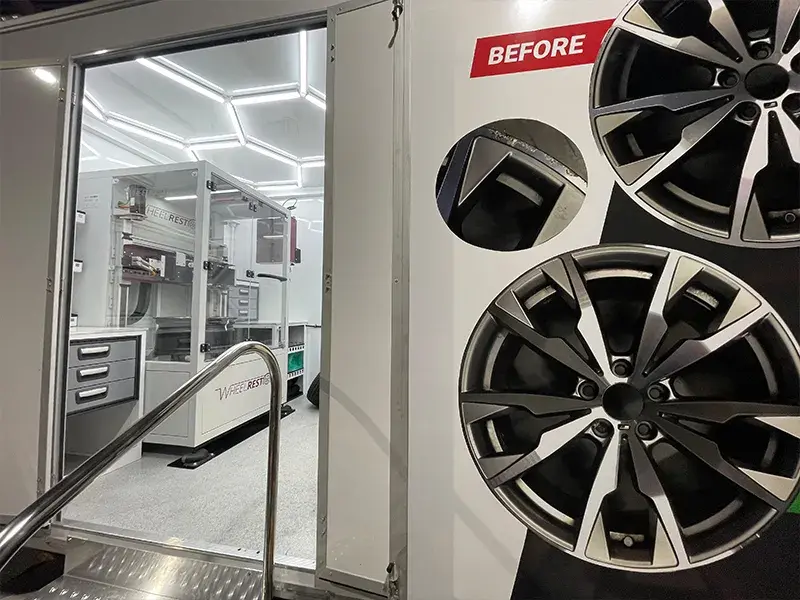
Left is what winter and one kerb leave behind. Right is the same wheel recut and sealed.
On the lathe
How we recut a wheel
Four stages, in this order. The sequence is the job. Skip one and the wheel comes back to you looking right for a season and wrong by the spring.
- 01
Tyre off
Nothing is refinished with rubber still on the rim, because the bead area is where corrosion hides. It also makes an oven cure impossible.
- 02
Strip and rebuild
The old lacquer comes off so we can see the true condition of the metal. Kerb damage in the rim edge is rebuilt and reprofiled now, before the wheel goes near the lathe. Cutting over a dent simply machines the dent into the face.
- 03
The cut
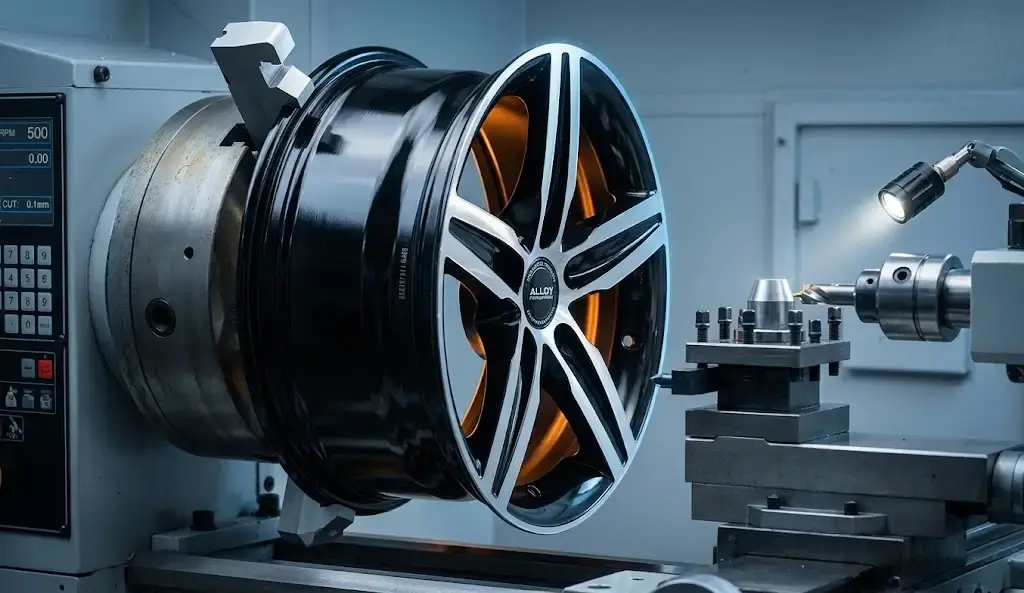
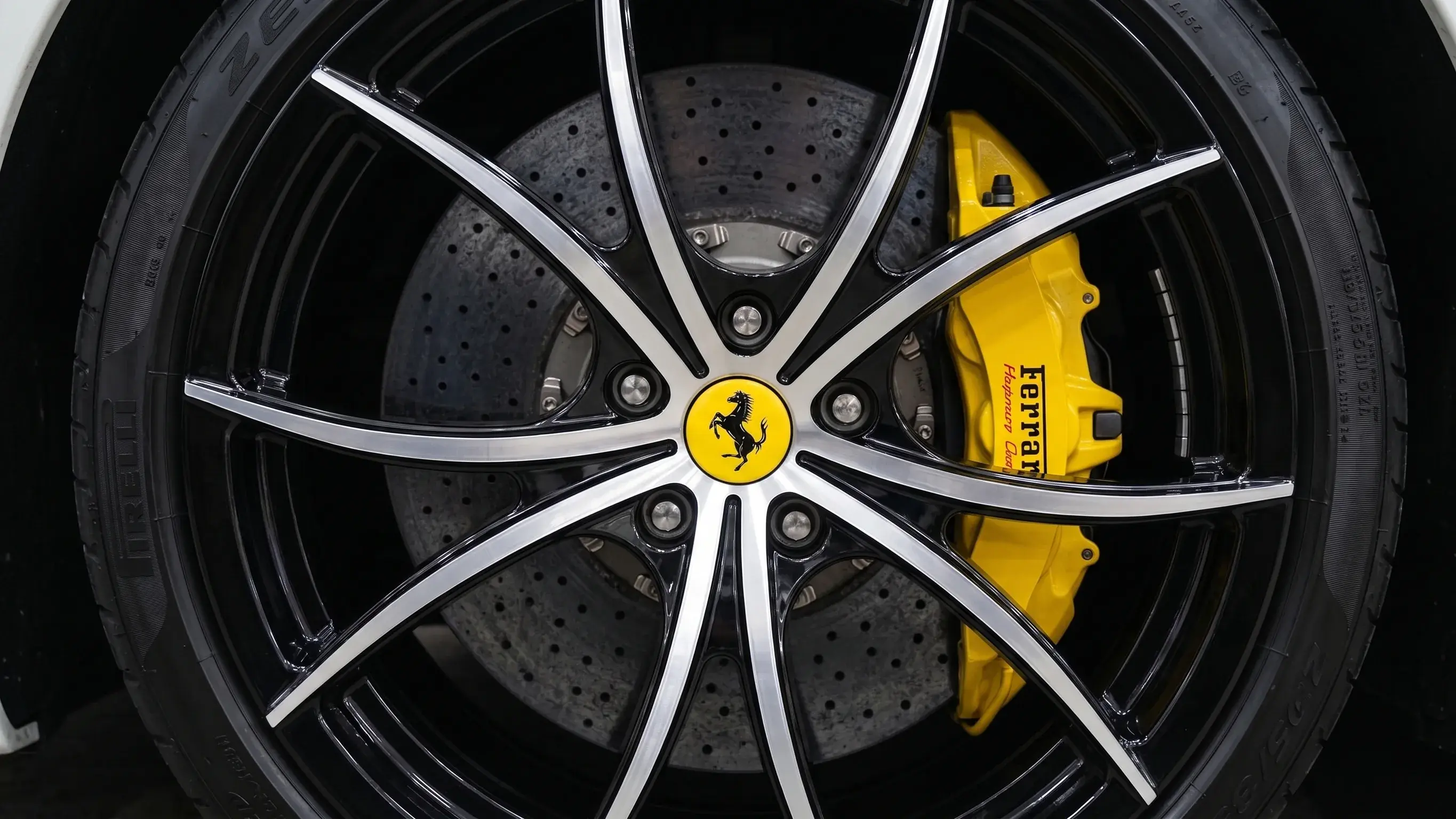
The wheel is mounted and trued, then the face is skimmed with a diamond tipped tool. We take the minimum needed to reach clean, even metal. Taking less matters, because every wheel has a finite number of cuts in it.
- 04
Sealed
Fresh lacquer goes on last and is cured properly. That coat is what decides whether you are back in three years or three months.
Wheels other shops turn away
Written off elsewhere.
Not written off here.
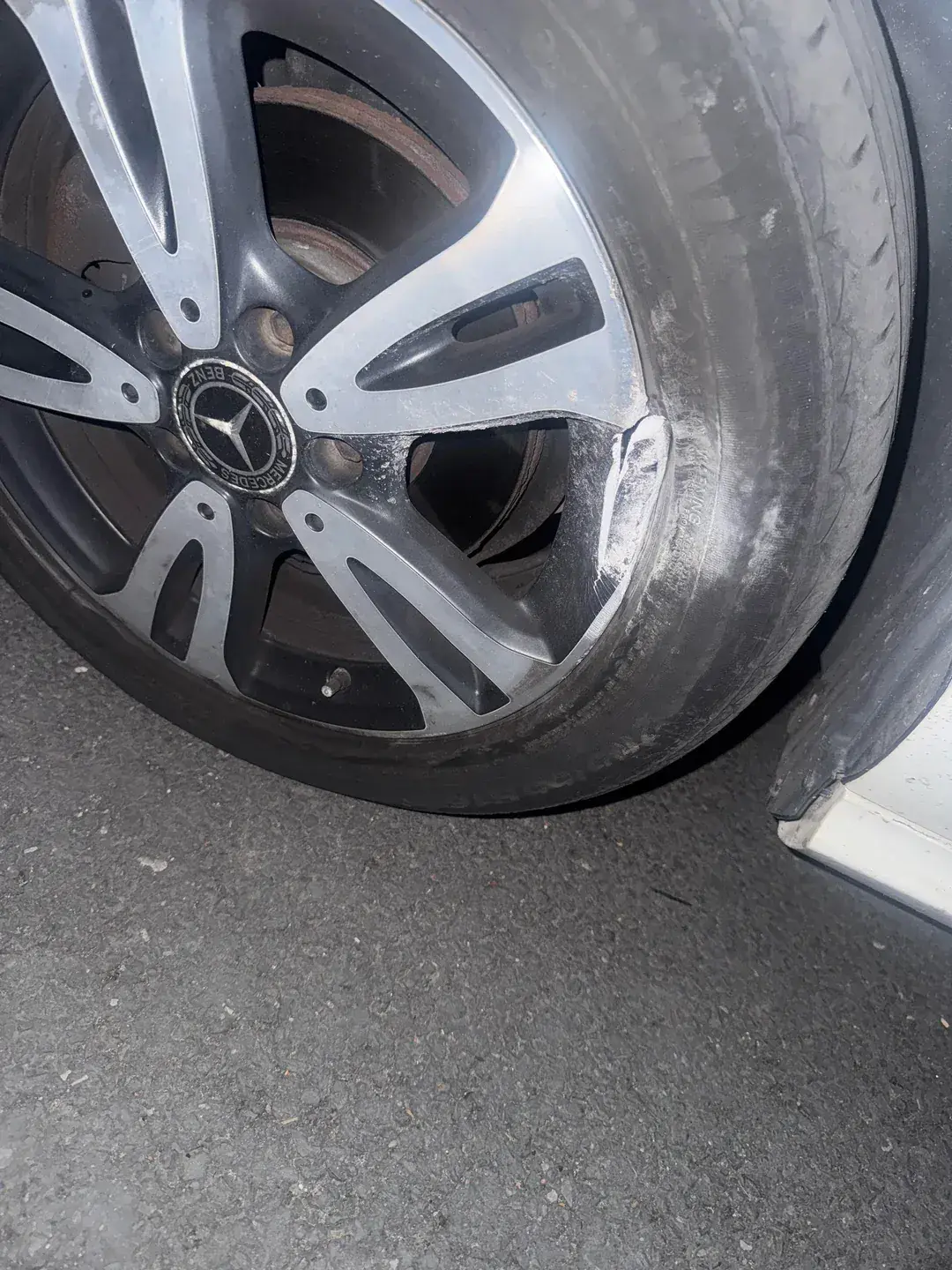
We take on wheels other shops have called too far gone. Deep kerb damage through the rim edge, corrosion that has crept well into the face, and wheels that have already been cut more than once.
There is a limit, and we will tell you plainly when a wheel has reached it. A rim cut too many times runs out of material, and at that point recutting is unsafe rather than merely uneconomic. We would rather lose the job than machine a wheel that should not be machined.
Drivers who came to us
I definitely recommend this place. I am very happy with my new alloys. He got the job done in 2 days. What a transformation. Very good quality work done and good prices. It was definitely worth the travel.
Common questions
- What is the difference between diamond cut alloys and diamond cut wheels?
- Nothing. They are two names for the same finish, and people use them interchangeably along with diamond cut rims. All three mean a wheel whose face has been machined on a lathe rather than painted, then sealed under clear lacquer.
- Can every alloy wheel be diamond cut?
- No. The wheel needs a machined face to begin with and enough material left to take a cut. Painted and powder coated wheels are not diamond cut wheels, and forcing the process on them is not appropriate. We assess each wheel before committing to it and tell you if it is not suitable.
- How many times can a wheel be recut?
- It depends on the wheel and how much was taken on each previous cut. Most will take several before the face becomes too thin. We measure rather than guess, and we will refuse a wheel that has run out of material rather than machine it thin.
- How long does a diamond cut finish last?
- In Scottish conditions expect a few years before the lacquer starts to show its age, and less if the car sits outside through winters on salted roads. The quality of the lacquer and how well it was cured makes more difference than anything else.
- Do I need to do all four wheels?
- Not necessarily, but be aware that a freshly cut wheel is brighter than one that has weathered. On a set where the others are still sound, a single wheel will stand out for a while until it settles. We will tell you honestly what it will look like before you commit.
Related work
Kerb damage
We rebuild the rim edge and restore the profile, so the damage is gone rather than filled and hidden.
Read moreRim repair
The rim edge meets the kerb before anything else does, and it is the only part of the wheel that has to hold air.
Read morePowder coating
Stripped to bare alloy, coated, and cured in the oven so the colour sits even and holds through winter.
Read more
Where we collect
We collect for this work across Glasgow, Lanarkshire and central Scotland, and return the wheels balanced and ready to fit.
Tell us what the wheels need.
Leave your number and what the wheels need, or message us on WhatsApp. You can also call 01698 640 171. Either way we come back with what the work involves and how long it takes.